





DOT 4 Brake Fluid: Specifications, Uses, DOT 3 Comparison & When to Change
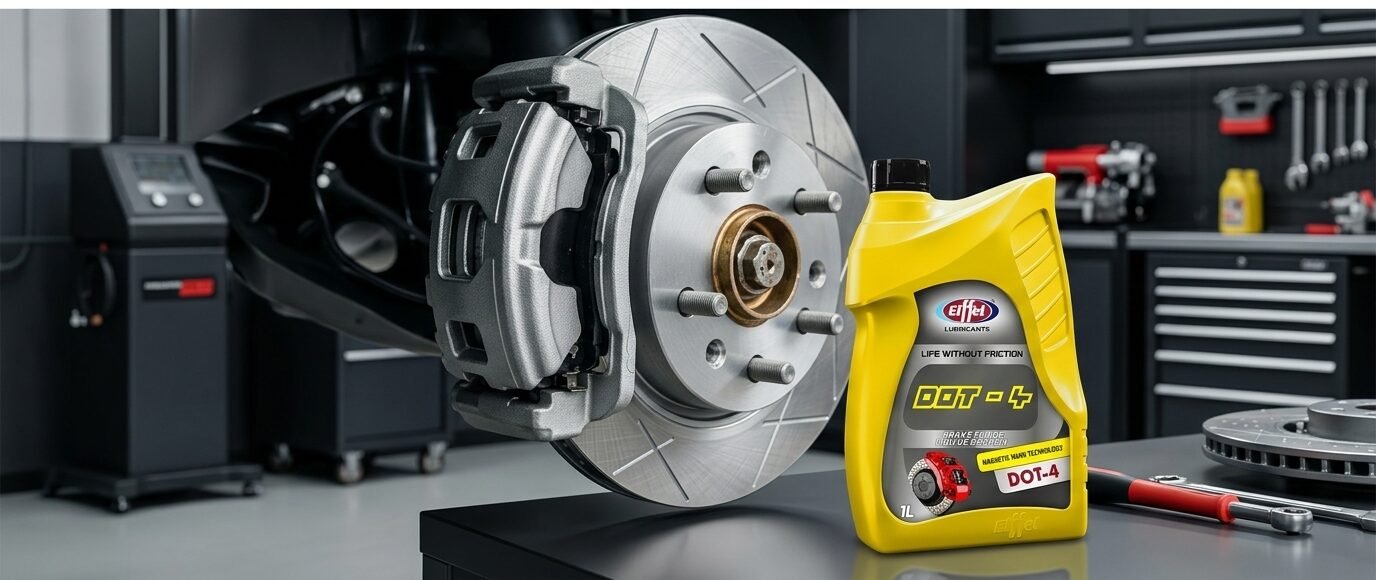
Brake fluid is one of the most important fluids in a vehicle's braking system. It transfers the force applied to the brake pedal through the hydraulic system, helping the brakes slow down or stop the vehicle. Choosing the correct brake fluid is essential for reliable braking performance and proper system operation.
DOT 4 brake fluid is commonly specified for passenger cars, commercial vehicles and other vehicles with hydraulic braking systems. It is designed to handle the heat generated during braking while maintaining suitable fluid performance across different operating temperatures.
In this guide, we explain what DOT 4 brake fluid is, its specifications, how it compares with DOT 3, where it is used and when it should be replaced.
| Parameter | DOT 4 Brake Fluid Specification |
|---|---|
| Base Technology | Polyethylene Glycol Ether |
| Minimum Dry Boiling Point | 230°C (446°F) – FMVSS No. 116 |
| Minimum Wet Boiling Point | 155°C (311°F) – FMVSS No. 116 |
| Common Applications | Passenger cars, commercial vehicles, ABS systems & hydraulic clutches |
| Mixing Compatibility | Compatible with glycol-based DOT 3 (if OEM allows); never mix with silicone DOT 5 |
DOT 4 is a classification of hydraulic brake fluid used in vehicle braking and clutch systems. It is generally based on glycol ether technology and is formulated with additives to support thermal stability, corrosion protection and compatibility with system components.
When a driver presses the brake pedal, hydraulic pressure is transmitted through the brake fluid to components such as the calipers or wheel cylinders. This pressure helps operate the braking mechanism and slow the vehicle.
Brake fluid must maintain suitable performance under both high-temperature braking conditions and low-temperature operation. It must also be compatible with the seals and materials used in the vehicle's hydraulic system.
DOT 4 is commonly selected for vehicles whose manufacturers specify DOT 4 or an approved equivalent.
DOT classifications define minimum performance requirements for brake fluids. These include boiling point, viscosity, chemical stability and other properties that affect braking system performance.
Under the United States Federal Motor Vehicle Safety Standard FMVSS No. 116, DOT 4 brake fluid has the following minimum boiling point requirements:
| Property | DOT 4 minimum requirement |
|---|---|
| Dry equilibrium reflux boiling point | 230°C (446°F) |
| Wet equilibrium reflux boiling point | 155°C (311°F) |
The dry boiling point refers to the fluid's performance before moisture absorption under the specified test conditions. The wet boiling point measures performance after the fluid has been conditioned to represent moisture absorption.
These figures are minimum requirements for the DOT 4 classification under FMVSS 116. They are not the measured boiling points of every DOT 4 product.
A product's actual performance should be confirmed through its current Product Data Sheet and applicable test documentation.
During braking, friction between brake pads and discs generates heat. Some of this heat transfers to the brake fluid through the braking components.
If brake fluid becomes excessively hot and starts to form vapour, the hydraulic system may not transmit pressure as intended. This condition can contribute to reduced braking effectiveness and a soft or spongy brake pedal.
A suitable boiling point helps the fluid withstand the heat generated during braking.
However, boiling point is only one part of brake fluid performance. Viscosity, corrosion protection, chemical stability and compatibility with brake system materials are also important.
DOT 3 and DOT 4 are both commonly used glycol-based brake fluid classifications. Their minimum boiling point requirements are different.
| Specification | DOT 3 | DOT 4 |
|---|---|---|
| Minimum dry boiling point | 205°C | 230°C |
| Minimum wet boiling point | 140°C | 155°C |
| General application | Vehicles specifying DOT 3 | Vehicles specifying DOT 4 |
DOT 4 has higher minimum dry and wet boiling point requirements than DOT 3 under FMVSS 116.
This does not mean DOT 4 is automatically suitable for every vehicle that uses DOT 3. Always check the vehicle manufacturer's instructions before changing brake fluid specifications.
The correct choice depends on the braking system design and the manufacturer's requirements, not simply on which fluid has a higher boiling point.
DOT 4 brake fluid is used in hydraulic braking and clutch systems where the vehicle manufacturer specifies this fluid classification. Common applications include:
Always confirm the required fluid specification from the owner's manual, brake fluid reservoir marking or official vehicle service information.
The presence of ABS or another braking technology does not automatically mean that a vehicle requires DOT 4. Follow the exact specification for the vehicle.
Brake fluid should be replaced according to the vehicle manufacturer's maintenance schedule.
Over time, glycol-based brake fluid can absorb moisture from its surroundings. Moisture contamination can reduce the fluid's boiling point and affect its performance.
Brake fluid condition may also be affected by operating temperature, contamination, vehicle age and maintenance history. Consider having the brake fluid inspected if:
Using old or contaminated brake fluid can affect braking system performance. Possible concerns include:
Regular inspection and replacement according to the vehicle manufacturer's schedule help maintain the braking system.
DOT 3 and DOT 4 fluids are generally glycol-based and are often chemically compatible. However, mixing them can affect the resulting fluid's overall performance, and the vehicle manufacturer's instructions must always take priority.
Do not mix brake fluid types simply because they appear similar.
DOT 5 silicone-based brake fluid is different from conventional glycol-based DOT 3 and DOT 4 fluids. It should not be mixed with DOT 3 or DOT 4.
DOT 5.1 is a separate non-silicone classification, despite its similar name to DOT 5. Compatibility and suitability must still be confirmed against the vehicle manufacturer's requirements.
Never use mineral oil or other hydraulic fluids in a brake system designed for glycol-based brake fluid.
Selecting the correct brake fluid is essential for the proper operation of the braking system. Before purchasing or adding brake fluid, consider these points:
If the required specification is unclear, consult a qualified technician before adding or replacing brake fluid.
Eiffel Brake Fluid DOT 4 is manufactured by Eiffel Lubricants using high-purity polyethylene glycol ether technology and specialized corrosion inhibitors to deliver consistent braking and clutch performance in passenger vehicles, commercial fleets, and heavy-duty equipment.
Key Technical & Commercial Highlights:
DOT 4 brake fluid is used in hydraulic braking and clutch systems where the vehicle manufacturer specifies DOT 4. It is commonly used in passenger cars and commercial vehicles.
Under FMVSS 116, DOT 4 has a minimum dry equilibrium reflux boiling point of 230°C and a minimum wet equilibrium reflux boiling point of 155°C.
DOT 4 has higher minimum dry and wet boiling point requirements than DOT 3. However, the correct fluid depends on the vehicle manufacturer's specification. A higher classification does not automatically make it suitable for every braking system.
The replacement interval depends on the vehicle manufacturer's maintenance schedule. Check the owner's manual or official service information rather than relying on one universal time or mileage recommendation.
DOT 4 can be used in ABS-equipped vehicles when the vehicle manufacturer specifies it. Always confirm the required fluid classification and any additional viscosity requirements.
Some vehicle manufacturers permit DOT 4 in systems originally specifying DOT 3, but this should not be assumed for every vehicle. Follow the manufacturer's instructions.
No. DOT 5 is silicone-based and must not be mixed with conventional glycol-based DOT 3 or DOT 4 brake fluid.
Yes. Conventional glycol-based brake fluids, including DOT 4, can absorb moisture over time. This can reduce the fluid's boiling point and affect its condition.
A low reservoir level may indicate brake pad wear or a fluid leak. Contaminated fluid may affect hydraulic system performance. A qualified technician should inspect the system to identify the cause.
No brake fluid should be considered suitable for every vehicle. Eiffel Brake Fluid DOT 4 should only be used where the vehicle manufacturer specifies a compatible DOT 3 or DOT 4 level fluid and the product's technical documentation supports the application.
DOT 4 brake fluid is an important part of hydraulic braking systems in vehicles that require this classification. Its minimum boiling point requirements, hydraulic performance and material compatibility help support reliable brake system operation.
Choosing the correct fluid and replacing it according to the vehicle manufacturer's maintenance schedule are essential parts of brake system care.
Eiffel Brake Fluid DOT 4 is designed for automotive and commercial vehicle brake and clutch systems requiring compatible DOT 3 or DOT 4 level performance. Always confirm the vehicle specification and consult the latest product technical information before use.
No Comments